For all the British plastic ‘Patriots’, let me introduce you to a real one…. Lieutenant Colonel Stewart Francis Newcombe DSO
15th July 2026
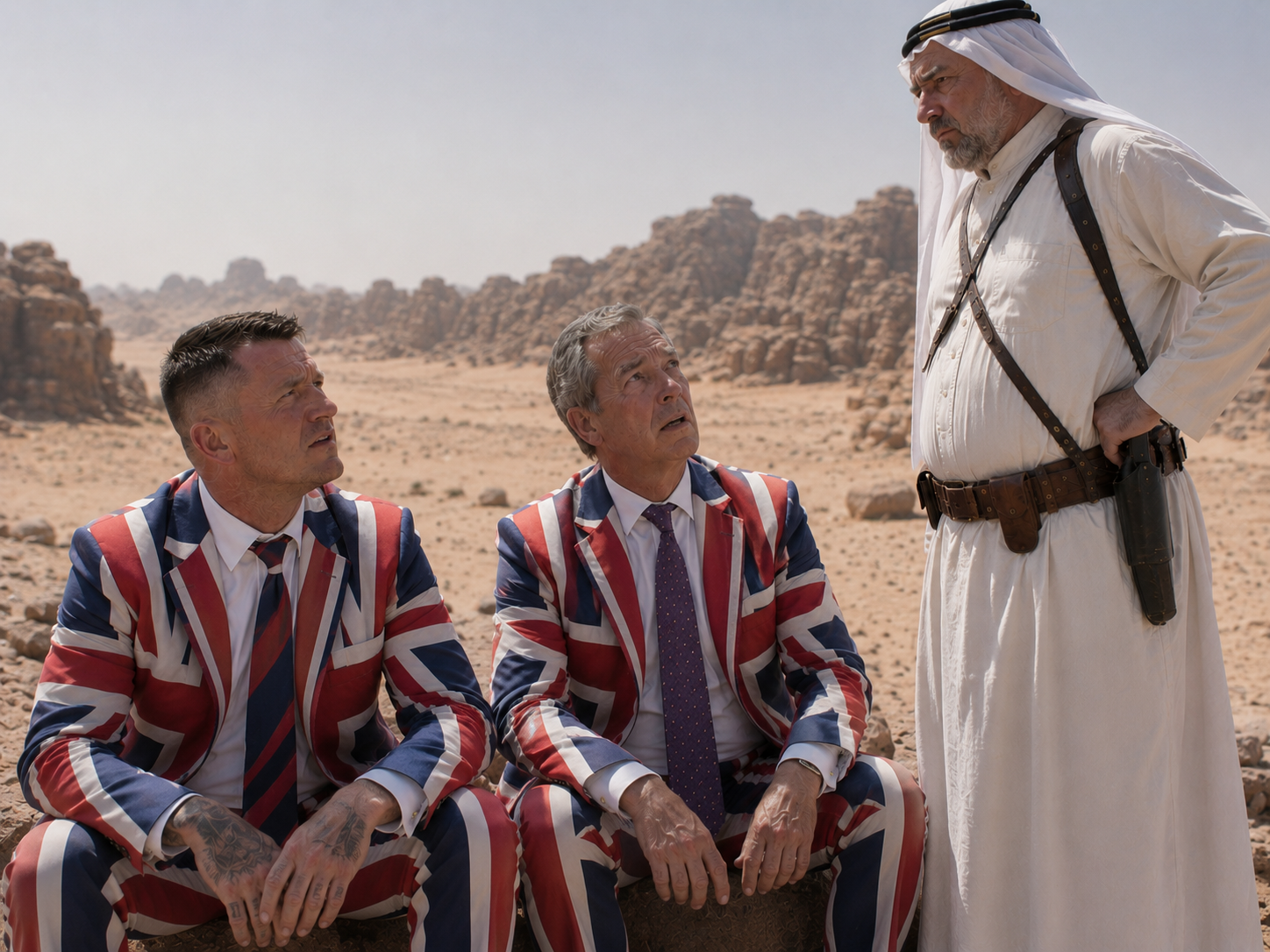
Dumb and Dumber…..
Let’s just say we describe the life of Newcombe to little Tommy ‘Two Names’ Robinson, Rupert ‘Pound-shop Mosley’ Lowe and Nigel ‘show me the money’ Farage, I have no doubt they would go all misty eyed with jingoistic fervour, what a bloke, a true British hero, just the type we like!
Stewart was born in Brecon in Wales on 9th July 1878. His Father Edward, a Civil Engineer who was a pioneer of Japanese Railway Construction. Having moved back to Britain in 1878, his father oversaw extensions to the Midlands Railway system. When Stewart was 8 years old his father died of pneumonia at only 43 years of age. Following his father’s death he was sent away to board at Christ’s Hospital, a Public School in London, a ‘bluecoat’ school that educated children of families that suddenly faced financial hardship. He finished his schooling at Felsted School in Essex before entering the Royal Military Academy in Woolwich, as a Gentleman Cadet. An outstanding student at the Academy he was awarded the Sword of Honour, bestowed on the best overall Cadet of the intake. On 23rd June 1898 he was commissioned into the Royal Engineers. He completed his technical training at the School of Military Engineering in 1899, just prior to being deployed in the 2nd Boer War in 1900. Deployed to 29th Fortress Company in Cape Town, he managed tactical fortifications, infrastructure defences, and railway security against Boer guerrilla raids.
In April 1901 Stewart was transferred to the Egyptian Army where he surveyed and built important railway lines in Sudan. During this posting he mapped the frontier between Sudan and Abyssinia and navigated routes connecting Sudan to the Belgian Congo. It was during this time that Stewart first got involved with espionage, mapping the Ottoman Hejaz Railway and the Berlin to Baghdad railway.
During 1913 and early 1914, operating under civilian cover, joined by Archaeologists TE Lawrence and Leanard Woolley he lead a critical geographic and water source mapping mission from the Sinai Peninsula over to Beersheba, all then territory of the Ottoman Empire.
Upon the outbreak of WW1, in August 1914 he was again moved, this time to the Western Front, deployed to Northern France with the Royal Engineers. During the chaotic Allies retreat from Mons he personally blew up a highly strategic bridge at Compiegne, vital in slowing down the advancing German forces.
When Turkey entered the war on the side of Germany Newcombe, along with Lawrence, were called to London to carry out final work to their Ottoman maps, before both being deployed to military intelligence in Cairo under Gilbert Clayton.
Desperate for his first command, Stewart departed Cairo in September 1915 to command the Royal Engineers of the 2nd Australian (ANZAC) division at Gallipoli. It was here that he was awarded his DSO, for extreme bravery during a mining operation. His men had been overwealmed and trapped by toxic fumes following a gas explosion in the tunnel. Newcombe personally insisted in leading the rescue mission of his men. After the disaster of the campaign that was Gallipoli (cheers Winston, but that’s another story for another day) Stewart briefly returned to the Western Front in 1916, where he distinguished himself in the hell that was the battle of Pozieres Ridge on the Somme.
In December 1916 he was returned to the Middle East as Chief of the British Military Mission in the Hejaz. He then joined Lawrence and other Arab Forces for their march to attack Weijh. Although Lawrence went on to global fame due to a combination of an American Journalists book. his own book The Seven Pillars of Wisdom and the later 1962 film ‘Lawrence of Arabia’ it was Newcombe, with his railway knowledge and explosives training who went on to have a much more devastating effect on the Hejaz Railway than Lawrence himself, leading mobile camel units deep behind enemy lines. Blowing track and trains, ambushing Turkish troops and blowing up bridges, Newcombe was the epitome of guerrilla warfare.
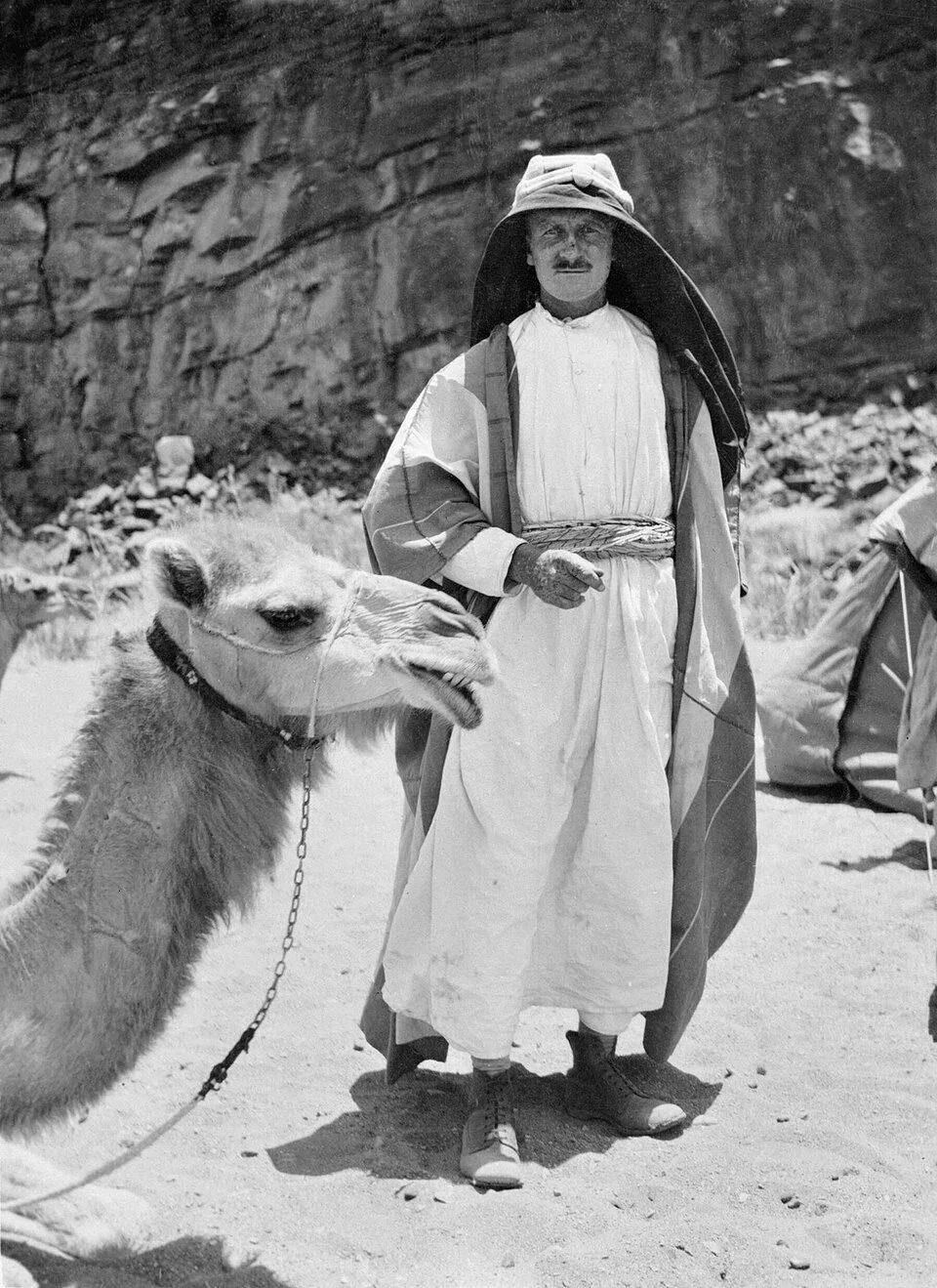
We are not the National Portrait Gallery so if you are waiting for a trigger warning……………
During the 3rd Battle of Gaza in November 1917 Newcombe was in command of a small, mobile camel unit operating deep behind the Turkish lines. Finding themselves seriously low on ammunition and totally surrounded by a hugely superior Turkish force, Newcombe and his surviving troops were captured.
As a senior officer and recognised intelligence asset, he was shifted around numerous Turkish prisoner of war camps, including two in Istanbul. It was here he contacted a near fatal case of smallpox and was hospitalised in Istanbul to recover. It was while in this hospital he met a pretty young French girl Elizabeth ‘Elsie’ Chaki, who had just turned 21, when they met, some 19 years younger than Newcombe. They soon became very close and Elsie visited him often while he recovered. Once he had recovered enough he was transferred to a camp in the spa town of Bursa, located on the Marmara sea. Refusing to be parted from him Elsie followed him there. Meeting him as and when she could she hatched an escape plan and arranged him delivery of clothes as a disguise as an Arab fisherman. Managing to escape the camp fence he made his way to the docks and boarded a pre-arranged fishing boat and sailed back to Istanbul. Elsie had organised a safe house and connected him to the local underground. Rather than making his way back to safety in Blighty Newcombe instead decided to go into his James Bond phase and conducted espionage activities until the war’s end. He even was involved in clandestine peace negotiations with Ottoman officials. At wars end Elsie returned to London, and they were married at Covent Garden registry office on 15th April 1919.
Are you still with me Tommy? (can you hear me down there okay son?)
Newcombe, like Lawrence. and numerous other British Officers seconded to the Arab Revolt was an Arabist. He had a deep affection for Arabia and the Levant, its language, its culture and its people. Like Lawrence he spoke Arabic, not as fluent as Thomas who also studied classical Arabic at Oxford, but he spoke it with a proficiency to more than get by.
In the 1920s Newcombe became a fervent backer of Arab Independence and Self-Determination, as also felt by Lawrence, he was dismayed at the way their Arab allies had been treated by the European colonial powers at the end of the Great War. It became a huge mission of his to help the community of British Muslims at the time, in London his main wish was a permanent place of worship for islam in the heart of the Capital (Still with me Tommy?) He observed the Muslim community struggle to secure a permanent home for their faith and made it his mission to achieve this.
He was appointed Joint Secretary on the executive committee of the London Mosque fund, a group established to raise money, secure land and oversee the creation of what would become the East London Mosque and Islamic Cultural Centre. (Tommy??)
This group was unique. It contained Establishment Elites (both aristocracy and politicians) Military figures such as Newcombe and Lord Nathan Rothschild, then the most prominent Jewish British citizen and head of a huge financial dynasty. (Take note Elon, the Super Rich, a Jewish Gentleman at that, involved in trying to build a Mosque, bringing communities together rather than trying to force them apart, it will never catch on!)
(I think Tommy has left)
Using his connections and administrative powers and familiarity with bureaucracy, to coordinate with the Treasury and secure building materials, even during wartime rationing, he was proud to attend the opening ceremony on Commercial Road in 1941. It emerged much later that Newcombe had helped in obtaining £100,000 pounds in British Government funds from the Prime Minister Winston Churchill for the construction of the Regents Park Mosque, that other poster boy of the far right, good ole Winny, using public money to fund a Mosque.
(Yeah he has definitely buggered off)
He retired from active military service in 1932. He was a strong advocate in his retirement for Palestinian rights and Arab Self-Determination. He fought political Zionism, arguing that immigration should be managed purely on spiritual basis rather than a state-building one.
Coming out of retirement during world war two he carried out covert intelligence operations in Iraq to secure British interests against the Axis.
Newcombe died on 18th July 1956 at Radcliffe Infirmary in Oxford. His wife Elsie died in 1973. They started a bit of a political legacy. His daughter Baroness Elles, a Bletchley Park code breaker during WW2, was made a Peer in the House of Lords in 1972, was a UN Diplomat and Vice-President of the European Parliament from 1982 to 1987. His Grandson James Edward Moncrieff Elles followed in his mothers political footsteps becoming a Member of the European Parliament for over 30 years.
Now that, my flag-shagging chums, is what you call a British Patriot!