The short but explosive life of Major Herbert Garland OBE MC FCS M.Inst Metals.
28th July 2026
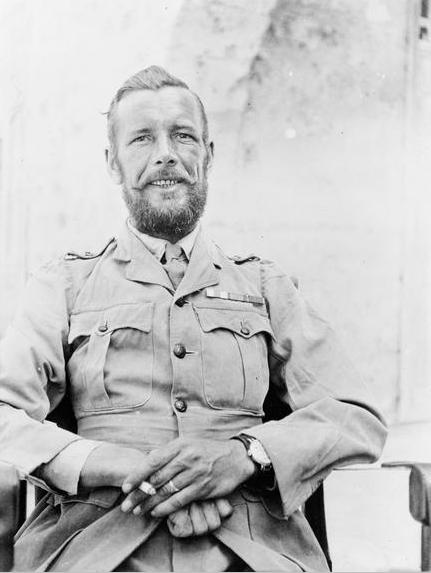
Major Herbert Garland
Herbert was born on 22nd November at 22 Rupert Road in Sheffield. He was the first of 5 children born to Charles Henry Garland and Hannah Elizabeth Garland in a working-class home in the city.
He enlisted in the Army Ordinance Corps aged 18 on 6th March 1901 as a Private in Woolwich, London, home of the arsenal of which the football club took its name. In the 13 years prior to the outbreak of the Great War Herbert, without the benefit of a university education, transformed himself from a private soldier to a highly skilled, self-taught weapons scientist.
He was first sent to technical training and specialised as an ‘Ammunition Examiner’ a dangerous but vital job requiring deep practical knowledge of gunpowder, high explosives and metallurgy. Having been posted to Gurnsey in 1906 maintaining the garrison artillery and explosives stores he showed his softer and literary side by publishing a well-received romantic fiction novel entitled ‘Diverse Affections; a Romance of Guernsey’. In 1907 he was transferred to the Sudan, managing ordnance stockpiles in Khartoum, However, the challenging arid climate did take an early toll on his health.
His exceptional technical skills were noticed by high command, and he was promoted to the Superintendent of Laboratories at the Cairo Citadel in Egypt. He was head of the British explosives Laboratory, overseeing the storage, safety testing and preparation of munitions for all British Empire forces in North Africa.
Whilst in this post Garland used all his spare time to become a pioneer in the science of metallography, studying the physical structure and components of metals by using a microscope. Combining these new skills with a love and fascination of ancient Egyptian artifacts, he developed a new technique to analise the internal crystalline structures of ancient metals by the careful polishing, etching, and examining them under the microscope. Despite having no academic background whatsoever, this work was so highly regarded that on 15th May 1913 he was elected as a Fellow of the Chemical Society (FCS). Between 1913 and 1914, he published three landmark papers in the Cairo Scientific Journal regarding the physical properties of tin and ancient tools.
At the outbreak of war, he was perfectly positioned in Egypt. Like Lawrence and Newcombe he had learned arabic and this, together with his expertise in explosives, made him an indispensable asset, leading him to be plucked from his Lab and commissioned as an officer to assist in the launch of the Arab Revolt and transferred to the Arab Bureau. He joined around the same time as TE Lawrence and it was a small group of soldiers, archaeologists and intellectuals, their mission to gather intelligence and coordinate irregular warfare to destabilise Ottoman rule in Arabia. In September 1916 now a Captain, he was again promoted to Major (known as Bimbashi in the Egyptian Army) he was dispatched to the port city of Yanbu to command its remarkable and almost bloodless defence against a vastly superior Ottoman force.
Following early setbacks in the autumn of 1916, the loose coalition of Arab tribes under Emir Faisal was fracturing and retreat seemed imminent. The Ottoman army advanced with two well-trained brigades to capture Yanbu, aiming to sever Allied supply lines and crush the revolt in its infancy.
Being fluent in Arabic, Garland utilised his engineering background to rally the local townspeople and fighters. He rapidly designed an emergency perimeter, dug trenches, and systematically organized machine-gun nests and signaling networks. Facing a heavily fortified town and the imposing presence of British naval warships anchored just offshore, the Ottoman forces, seeing the illuminated ships offshore, they soon realised they had lost the element of surprise and withdrew without launching a full-scale assault. Lawrence later noted that this was the exact moment that the tide turned in the Arab Revolt.
Lawrence noted Garlands popularity with the troops, both Arabic and Colonial alike and his great expertise in explosives and demolition and what a good tutor he was in those disciplines to the Bedouin forces. Herbert immediately moved his focus to aggressive guerrilla operations against the Ottoman forces. Taking his freshly trained Beduin with him, in February 1917 at Toweira Station he personally planted an improvised explosive device, using a pressure switch mechanism, that he had designed, under the track. This raid resulted in the first moving train derailment by explosives in the world. Whilst trains had previously been destroyed by stationary cargo explosion, accidents or track removal sabotage, Garlands raid is considered a historic milestone in Guerrilla warfare. It proved that a small, highly mobile guerrilla force can successfully neutralise heavy, fortified state infrastructure. Although Lawrence achieved worldwide fame for his attacks on the Hejaz Railway, it was Garland who taught him everything he knew and was its sole pioneer.
He spent the rest of the war, like Lawrence, Joyce and Newcombe, harassing the Turks to great effect and, in the field, invented three distinctive explosive and technical devices:
The Garland Mine - An innovative, pressure sensitive landmine specifically made for railway sabotage, using an automatic contact detonation switch of his own design.
The Garland Granade - Invented originally in 1914 when in his Labaratory in Cairo, it soon became a critical substitute for standard ordanance early in the war, with over 174,000 units produced. it was made from common food tins packed with an exlosive charge and gunpowder and shrapnel of bits of barbed wire or spent Turkish bullets. A fuse in the top lit with a match before throwing.
The Garland Trench Mortar - This was a 65mm caliber improvised mortar designed to project explosives over enemy lines and consisted of a smoothbore steel barrel fixed at a permanent 45 degree angle fitted on a wooden base. It became the most widely used mortar by British and Australian forces during the Gallipoli Campaign.
A common quip with the British forces in the Hejaz at the time was if munitions and equipment were thin on the ground, do not worry, Garland will invent something.
His health, that had suffered since his first posting in the Sudan had become steadily worse. Having been first pulled from the field in 1917 after his historic derailment raid, his commanding officer describing him as broken and unable to eat food, a physical wreck. Despite his protests, he was sent to Cairo for a period of mandatory medical rest. However, before fully recovered he slipped out of hospital and returned to the Hejaz,. Upon his return he immediately undertook a 100 mile camel march in under two days to deliver a critical message, further deteriorating his long term health.
It was not until March 1921, some three years after the end of the Arab revolt, that Garland was finally and permanently pulled out of the Middle East theatre due to ill health. He was ordered home to England. Tragically, this final pull-out came too late, destroyed by the brutal physical toll of the desert campaign, Herbert died of Aortic aneurysm on 2nd April 1921, just six days after returning home to England. He was 40 years old.
Some historians have accused Lawrence, with his early 1920’s thrust to fame through his book and Lowell Thomas, of stealing Garlands thunder a little. This may be a little harsh as Lawrence was always quick to acknowledge his admiration for Herbert. But one thing is for sure, had Garland survived he would have been more than happy for Lawrence to keep that fame, he would have just returned to his true home, his Laboratory.